

Radiant Floor Heating in Concrete Slabs

Section 1: Why Concrete is the Ideal Heat Medium

Concrete is one of the best materials for radiant floor heating because it acts as a thermal battery. It absorbs heat, stores it, and then releases it slowly over time.
Unlike forced air systems that heat the air in bursts, a heated concrete slab delivers steady, even warmth across the entire surface. Once the slab is up to temperature, it maintains comfort with minimal energy input.
Key Benefit:
- Thermal Mass - Stores and releases heat gradually
- Even Heat Distribution - No hot or cold spots
- Energy Efficiency - Less cycling, more consistency
- Durability - Ideal for garages, shops, basements, and homes
Section 2: How Radiant Heating Works in a Concrete Slab
Radiant heating systems circulate warm water through PEX tubing embedded in the concrete slab. As the water flows, heat transfers into the slab and radiates upward into the open space.
Because the entire slab becomes a heat source, the warmth rises naturally. It heats people and objects directly rather than just the air.
This creates a more comfortable and efficient heating experience, especially in open or high-ceiling spaces.

Section 3: Concrete Slab Design Basics
A typical slab-on-grade radiant heating system is built in layers, each playing a critical role in performance and efficiency.
Standard Slab Build-Up:
-
Compacted Base
- Gravel or sand for drainage and stability
-
Insulation Layer
- Prevents heat loss into ground
- Rigid foam (R10 recommended) — see our Heat-Sheet insulation for a system built specifically for this layer
-
PEX Tubing Layout
- Typically Spaced:
- 12" on center (concrete standard)
- Use a tighter spacing for higher heat demand (like snowmelt apps)
- Browse PEX tubing options sized for your project
- Typically Spaced:
-
Concrete Slab
- Usually 4"-6" thick
- Fully encasing tubing for optimal heat transfer
Key Considerations
- Proper insulation is critical. Without it, your heat is lost downward.
- Consistent tubing spacing ensures even heating.
- Slab thickness affects heat-up time and retention.
Section 4: Why Slab-on-Grade & Radiant Heating is So Effective
Slab-on-grade construction pairs perfectly with radiant heating because the system is built directly into the structure of the floor.
This makes it:
- Highly Efficient - Heat goes exactly where it's needed
- Low Maintenance - No ductwork or moving air systems
- Comfort Driven - Warm floors, consistent temperatures
Radiant heating is especially effective for:
- Garages
- Shops
- Pole Barns
- Basements
- Snow Melt Areas
- New Home Builds
Section 5: Why HUG Hydronics is the Best System for Concrete Slabs
Traditional radiant systems often rely on "walls of copper," multiple valves, and high-pressure components that can be difficult to install and maintain.
HUG Hydronics takes a different approach.

What Makes HUG Different?
-
Low-Pressure System - No need for complex pressure components.
- Simple Installation - Systems can be installed in a fraction of the time.
- Submersible Pumps - All pumps sit directly in the tank of water and connect straight to your floor loops, with no external plumbing or pump housing to install separately.
- Flexible Heat Sources - Choose the heat source that fits your build perfectly!
- Minimal Components - With fewer parts, there are fewer failure points.
Ready to Plan Your Slab?
Use our design wizard to size your system for your exact slab dimensions, or request a personalized quote and we'll walk you through it.
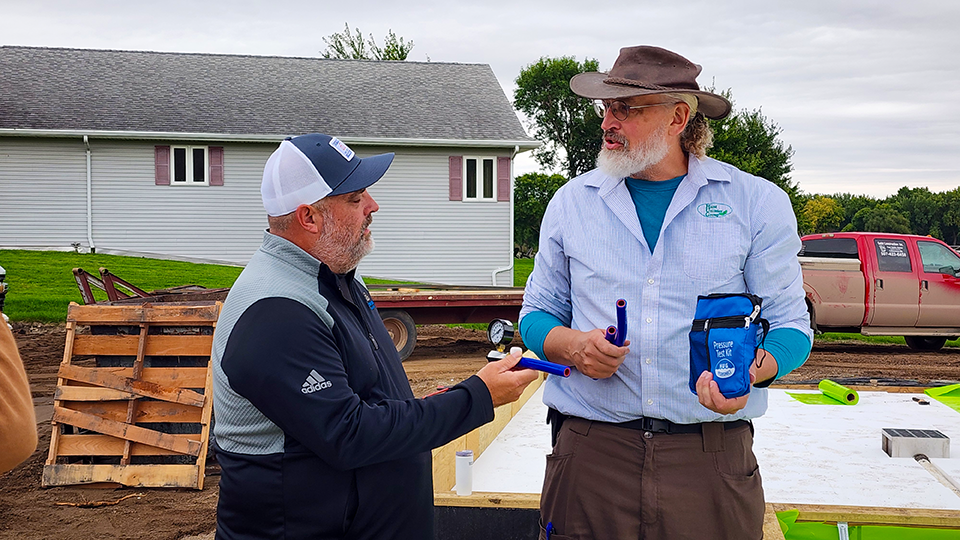
What's Happening in Cottonwood?
Extreme Panel's demonstration house brings building techniques into the real world. As a sponsor, HUG Hydronics is providing Heat-Sheet, PEX, and the in-floor heating distribution system for the project.
Fellow EP Summit sponsor BUILD Show Network is documenting the process with cameras, interviews, and a closer look at each step of the process, leading up to the January 2027 Summit.
See the build come together.
Take a closer look at the project, then explore what radiant in-floor heating could look like in your own home, shop, or garage.
Start the HUG Product Wizard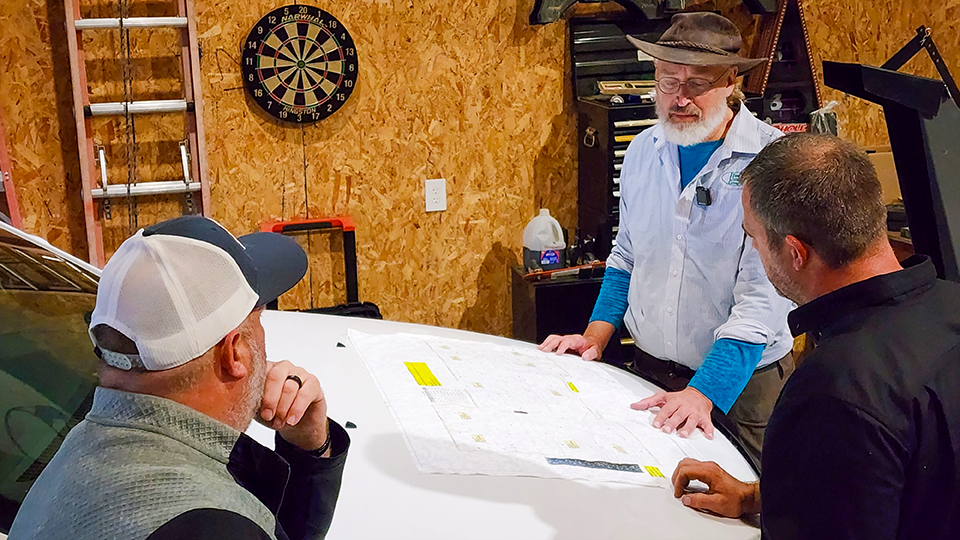
What HUG Hydronics Brings to the Project.
- Start below the slab
- Heat-Sheet insulation provides the foundation for the project's radiant floor.
- Put warmth underfoot
- PEX loops carry heated fluid through the floor, turning the slab into part of the heating system.
- Bring it together with HUG Hydronics
- The HUG Hydronics system brings pumps and controls into a compact system simplifying the mechanical setup that serves the floor.
No. The Wizard is designed to walk you through the basics in plain language. Homeowners and building professionals can use it to explore what their project may need.
HUG Hydronics is sponsoring Extreme Panel's project by providing its in-floor heating materials and system. BUILD Show Network is a fellow EP Summit sponsor documenting the demonstration house. The summit is planned for January 2027.
Yes. Call HUG Hydronics at 218-587-5001 or email sales@hugllc.com. Additionally, completing the HUG Wizard is a useful first step toward discussing your program.
Nope, and we love Extreme Panel's way of building, however this project showcases only one type of application of HUG's system. HUG Hydronics can also be used in other homes, shops, garages, and ag buildings where radiant floor heating is appropriate.
Have your floor plan or approximate dimensions handy, along with basic details about your insulation, ceiling heights, and windows. Think about which spaces you'd like to control with separate thermostats. The Wizard will guide you through the planning process, and HUG's team can help review your project's needs.