

FAQ

A few questions that come up often and don't fit neatly under one specific product. For installation steps, troubleshooting, and manuals, visit our How-To Library.
How large of an area can a HUG Hydronics system heat?
The full system with pump splitters can heat up to 5,400 sq ft under normal conditions with standard insulation. The full system has 9 floor-loop pumps plus one heat source pump — each loop pump covers 300 sq ft on its own, or 600 sq ft with a splitter. The mid-size package (5 loop pumps) covers 1,500–3,000 sq ft with splitters, using one heat source pump.
How much space does the unit need?
The tank is 22" tall, 33" wide, and 17" deep. For a new installation, plan for 36" of width, 18" of depth, and 24" of clearance in front for service access, plus about 12" above for cover removal. It typically sits about 1–2" from the wall depending on PEX routing. If you're using a tankless water heater, it's usually wall-mounted above the tank — check that unit's own space requirements separately.
What heat sources can I attach to my HUG Hydronics unit?
Any hot water source rated for home heating can be connected directly. The easiest options are electric or gas tankless water heaters — AO Smith is our go-to for value, ease of use, and ease of repair. Multiple heaters can be combined for off-peak heating, or paired with solar or wood heat through a heat exchanger. See our heat source selection guide for how to hook up other heat source types.
Geothermal heat pumps are now supported with our larger-capacity pump upgrade kit, which handles the higher flow rates geothermal systems require. For custom flow setups or unique applications, connect with our engineering team — ask for Ryan.
What setups are not recommended, and can HUG Hydronics still heat upper floors?HUG Hydronics is an open-loop system, so it's not recommended for pressurized radiator systems.
As for distance: we don't recommend pumping fluid two floors or more above the tank. In practice, this is rarely a real limitation — HUG Hydronics tanks are small enough to fit in almost any closet, so rather than forcing one basement tank to push heat through multiple stories, you simply place a second tank on the upper floor, close to where the heat is actually needed.
This isn't a workaround, it's often the better design. Shorter PEX runs mean less heat loss and a more efficient system, and a tank per floor gives you tighter, more independent control over each floor's heating zones instead of one system managing an entire building's vertical demand at once.
What fluid should I use in the system?
Any hydronic fluid or water works. Reverse-osmosis water is best; softened water is a close second. Tap water is fine too, though it may carry minerals or bacteria that aren't ideal for the system long-term. If you want freeze protection, use propylene glycol antifreeze at about 33% (one part antifreeze to two parts water) — up to 50% is fine if you need more protection.
Is HUG Hydronics suited for large or high-end new home builds?
Yes — we regularly design systems for large, high-end new construction. For bigger builds, we often install two separate HUG Hydronics tanks rather than trying to stretch one system across the whole space. Since each tank is small and quiet, they can be placed in two different areas of the building, which means shorter, more efficient PEX runs to each zone instead of long loops snaking across the entire structure. It's a standard approach for larger projects, not a workaround — and it often performs better than a single oversized system would.
Is it a problem that HUG Hydronics is an open-loop, unpressurized system?
No — this is actually one of the system's biggest advantages, not a limitation. Most hydronic systems are closed-loop and pressurized because that's the industry default, but pressure itself is a source of risk: it's what causes leaks to become urgent, fittings to fail, and systems to require more specialized tools and know-how to service safely.
Because HUG Hydronics runs low-pressure and open-loop, there's far less stress on the whole system, which means fewer leaks and a safer system to work on — no pressurized lines to worry about when you're doing maintenance. The open-loop design also means you can easily monitor your system, top off or change your hydronic fluid, or add antifreeze whenever needed, all without depressurizing or shutting down a sealed system first. It's a deliberate design choice, not a shortcut.
Why isn't HUG Hydronics's open-loop, low-pressure design the industry standard, if it's actually better?
Industry standards take a long time to shift, and hydronic heating is no exception. Closed-loop, pressurized systems became the default decades ago, largely built around older, higher-temperature systems — think cast-iron radiators and boilers that needed pressure to push hot water through long, complex piping runs across a building.
Modern radiant floor heating doesn't have those same constraints. It runs at lower temperatures, in PEX pipes rather than copper, and with tanks small enough to place close to where the heat is actually needed, there's far less need to force fluid under pressure through long runs in the first place. HUG Hydronics was designed around what radiant floor heating actually requires today, not around solving problems from an older generation of heating technology.
Like most established industries, hydronic heating has been slow to move past "the way it's always been done" — even when a simpler, lower-pressure approach fits the technology better. We think that's changing, and we built HUG Hydronics for where the technology is headed, not where it started.
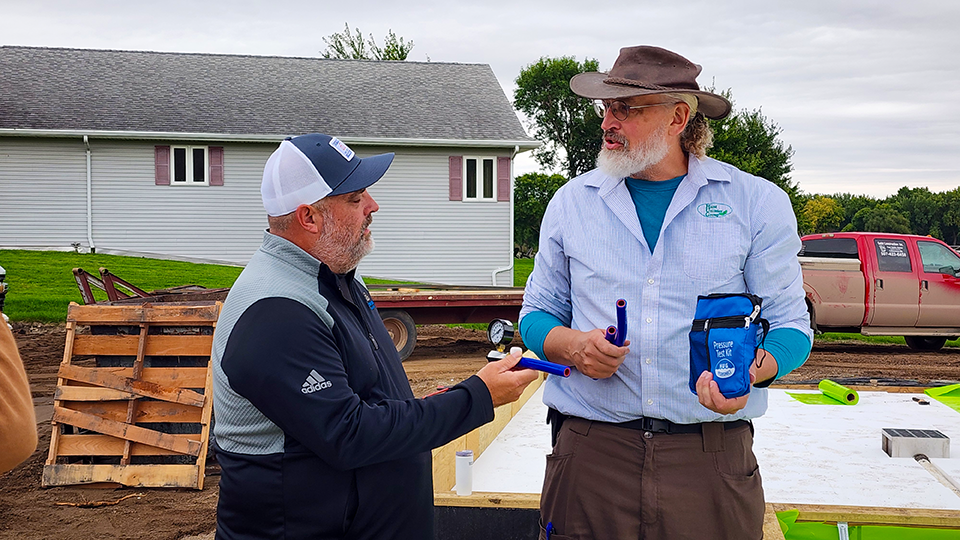
What's Happening in Cottonwood?
Extreme Panel's demonstration house brings building techniques into the real world. As a sponsor, HUG Hydronics is providing Heat-Sheet, PEX, and the in-floor heating distribution system for the project.
Fellow EP Summit sponsor BUILD Show Network is documenting the process with cameras, interviews, and a closer look at each step of the process, leading up to the January 2027 Summit.
See the build come together.
Take a closer look at the project, then explore what radiant in-floor heating could look like in your own home, shop, or garage.
Start the HUG Product Wizard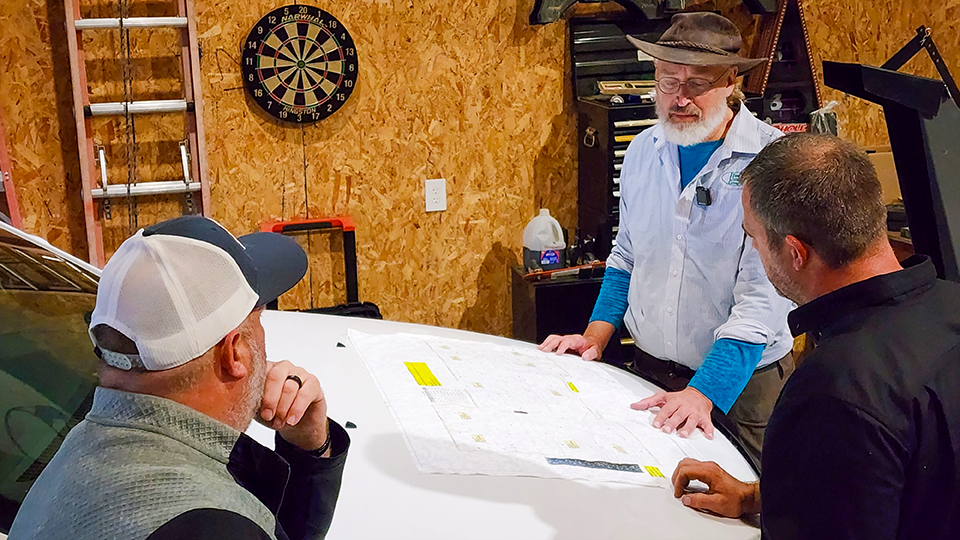
What HUG Hydronics Brings to the Project.
- Start below the slab
- Heat-Sheet insulation provides the foundation for the project's radiant floor.
- Put warmth underfoot
- PEX loops carry heated fluid through the floor, turning the slab into part of the heating system.
- Bring it together with HUG Hydronics
- The HUG Hydronics system brings pumps and controls into a compact system simplifying the mechanical setup that serves the floor.
No. The Wizard is designed to walk you through the basics in plain language. Homeowners and building professionals can use it to explore what their project may need.
HUG Hydronics is sponsoring Extreme Panel's project by providing its in-floor heating materials and system. BUILD Show Network is a fellow EP Summit sponsor documenting the demonstration house. The summit is planned for January 2027.
Yes. Call HUG Hydronics at 218-587-5001 or email sales@hugllc.com. Additionally, completing the HUG Wizard is a useful first step toward discussing your program.
Nope, and we love Extreme Panel's way of building, however this project showcases only one type of application of HUG's system. HUG Hydronics can also be used in other homes, shops, garages, and ag buildings where radiant floor heating is appropriate.
Have your floor plan or approximate dimensions handy, along with basic details about your insulation, ceiling heights, and windows. Think about which spaces you'd like to control with separate thermostats. The Wizard will guide you through the planning process, and HUG's team can help review your project's needs.