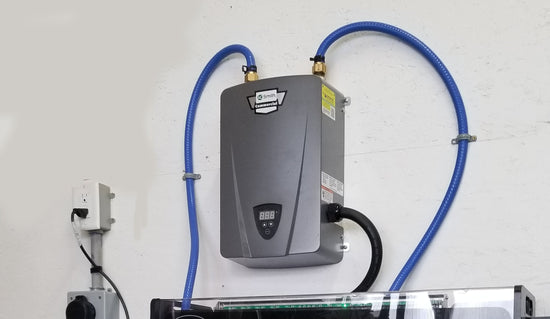


For Plumbers & HVAC
The field report
A Real Install, At a Real Plumbing Company
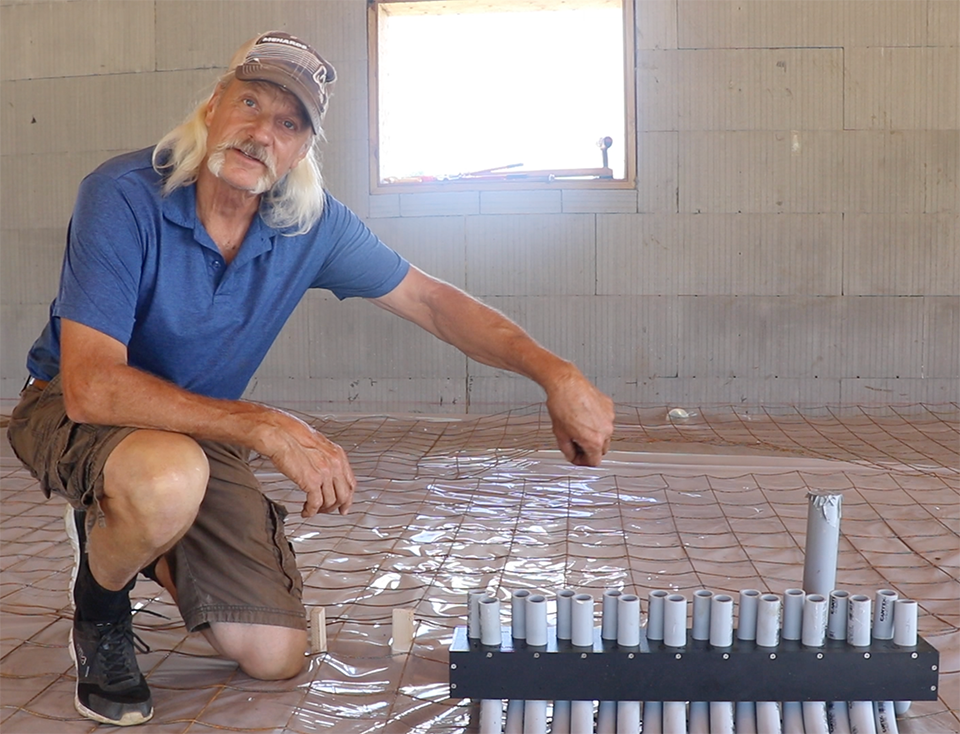
Joe Bates, owner of Northern Air Plumbing & Heating, had his tech Kevin install a HUG Hydronics system on a job to see how it held up against the way they'd always done it. No script, no sales pitch — just a field tech doing a job, with one of our people on site taking notes.
Kevin didn't read the manual. A few photos and he was working.
By 11am — about an hour and a half in — the HUG system was set up. Asked how it compared to a traditional manifold install, he said:
"I would still be hooking up manifolds right now. This is going to take 1 day out of the 3 this job would have taken."
He finished running the gas line to the boiler, filled and bled the system (two passes to clear the air, smooth after that), and had it heating up by 2pm.
"Installation of the HUG system took about an hour, and then I was off to my next job."
— Kevin L., Service Tech, Northern Air Plumbing & Heating
Northern Air has used HUG Hydronics on builds since. Here's Joe's take, as owner:
"It's about time in-floor heating improved using modern technology. I quickly became a believer in the HUG system. It saves me time and money."
— Joe Bates, Owner, Northern Air Plumbing & Heating
What HUG Hydronics does different
-

No wall of copper, no 96 parts
Traditional in-floor hookup means a wall of copper fittings and dozens of individual parts to assemble on-site. HUG puts most of that plumbing inside the tank itself. On install day, you're connecting PEX pipes, heater hoses, and thermostat wires to the tank — not building a manifold from scratch.
-

EZ Push connections, not hand-plumbed fittings
Floor loops connect to the tank with automotive-quality blue EZ Push hoses — push the hose onto the PEX pipe, add a clamp, done. No soldering, no cutting and threading a manifold bank by hand.
-

Adding a zone means adding a pump, not a redesign
Inside the tank, each submersible pump drives 1–2 PEX floor loops. Need another zone later? Add another pump — it plugs straight into the control board, no re-plumbing involved. The board handles up to 4 thermostats standard, 8 with the expander board. A fully maxed system runs 9 pumps (one dedicated to the heat source) for up to 4,500–5,400 sq ft. It can also handle dual fuel with ease.


Built from field feedback
Kevin's install came with real feedback, not just praise — and we used it. Based on notes from this and other jobs, hose lengths have since been extended so techs aren't running short mid-install, and other fitting and connection improvements have gone into the system based on what actual plumbers run into on actual jobsites.
If you install this and have a better way to do something, we want to hear it.
| Install time (mechanicals) | ~1–2 hours, vs. a full day+ for traditional manifold plumbing |
| Fluid system | Open system with no pressure. Fewer leaks, more saftey |
| Glycol (Optional) | Up to 30% boiler side, up to 55% floor side (if a plate exchanger isolates the two) |
| Pump/loop sizing | ~300 sq ft per loop (300 ft recommended, 350 ft max); 1–2 loops per pump |
| Max configuration | 9 pumps (8 floor-loop pumps with dual heat source), up to 4,500–5,400 sq ft |
| Coverage | 900 – 5,400 sq ft, up to 8 zones (HUGmini: 300–1,000 sq ft, electric only) |
| Heat sources | Electric, gas, LP, wood, solar (heat exchanger may be required) |
| Warranty | 12-year limited (3-year full) |
| Code approval | Approved for U.S. and Canada |
FAQ
Does this replace the plumber on the job?
No. Gas/fuel line hookup, code compliance, system commissioning, and boiler integration are still a licensed job. What changes is the manifold layout and plumbing time — the part of a traditional install that eats the most hours gets largely eliminated.
How much faster is it, really?
On a documented install at Northern Air Plumbing & Heating, with an experienced tech (20+ years), a job estimated at 3 days was cut to 1 day for the in-floor portion — with no prior familiarity with the system and no manual needed, just reference photos.
Can I still run the glycol mix I prefer?
Yes — the split fluid system with plate heat exchanger lets you run different glycol percentages on the boiler side vs. the floor side, so you're not forced into a single mix for the whole system.
What's actually in the box vs. what do I still need to source?
The HUG tank, pumps, and manifold-equivalent plumbing come as one unit. Heat source (boiler, water heater, etc.), gas/fuel line, and electrical hookup to that heat source are sourced and installed as usual.
Is this a DIY product, or built for pros?
Both exist — HUG also serves homeowners and contractors. But the underlying hydronics (glycol handling, zoning, plate heat exchange) is built to real trade standards, which is why an experienced tech can walk onto a job cold and be productive within the hour, the way Kevin was at Northern Air.
Tech and Specs
-
Everything your crew or your inspector needs, in one place:
HUG Hydronics Spec SheetHUG Hydronics Heater Selection Spec Sheet
-