

Why Radiant In-Floor Heat?

Radiant In-Floor Heat provides many advantages over forced air heat.
1. Even Heating

In-floor radiant heat provides an even heat with a minor heat gradient going up into the room. This leaves the warmest air where it is most comfortable: your toes.
Forced air heating room temperatures vary widely, with the warmest air coming from the vent and then hanging around the ceiling. The means that forced air heating often pushes out air at 100°F.
2. Efficiency

Efficiency comes from the even heating. You do not need to create 100°F air, instead all your floors can be an even 72/74°F. Nothing has to be overheated or dry out as a result of hot air being forced into the house.
Water can also carry and transfer 3,500 times more heat than air can, making hydronic in-floor heating up to 30% more efficient (industry sources estimate.)
3. Better Air Quality

Radiant in-floor heat is better air quality because it does not blow dust, fur or anything else in the air around.
4. It's Quiet

When the thermostat calls for heat, the HUG Hydronics system turns on its pumps. There is no noise in the floor, as the warm water flows silently under feet, and in the room (or closet) where the HUG Hydronics system is, it is still nothing more than a quiet whirling of the pumps at work.
5. It's Easy

Once the PEX pipes are in the floor, and your heat source installed, the HUG Hydronics in-floor heating system takes only an hour to install and uses only a few simple tools. It's designed to be understandable and repairable. Almost every part is replaceable in a few minutes, no tools needed.
We also have the directions on the website (See the How To Library) for all our common repairs and problems, and always have live tech support to answer any questions, or walk you through a step that is unclear.
6. It's Safe

In-floor heating doesn't involve open flames or exhaust in your living space, unlike combustion-based forced air furnaces — which is why gas leaks and carbon monoxide incidents tied to forced air systems are what make the news, not radiant floor systems.
The HUG Hydronics in-floor heating system, does each of these better- because you can understand it and control it.
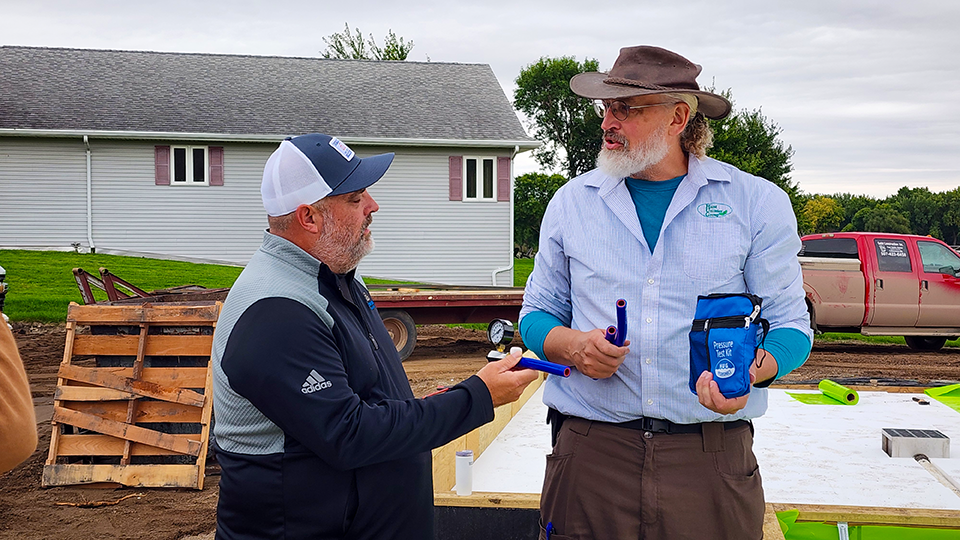
What's Happening in Cottonwood?
Extreme Panel's demonstration house brings building techniques into the real world. As a sponsor, HUG Hydronics is providing Heat-Sheet, PEX, and the in-floor heating distribution system for the project.
Fellow EP Summit sponsor BUILD Show Network is documenting the process with cameras, interviews, and a closer look at each step of the process, leading up to the January 2027 Summit.
See the build come together.
Take a closer look at the project, then explore what radiant in-floor heating could look like in your own home, shop, or garage.
Start the HUG Product Wizard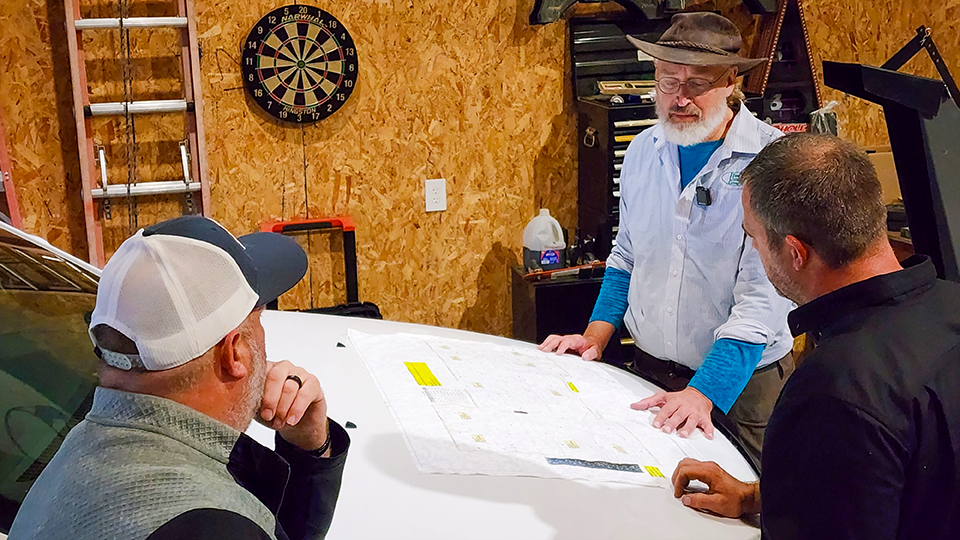
What HUG Hydronics Brings to the Project.
- Start below the slab
- Heat-Sheet insulation provides the foundation for the project's radiant floor.
- Put warmth underfoot
- PEX loops carry heated fluid through the floor, turning the slab into part of the heating system.
- Bring it together with HUG Hydronics
- The HUG Hydronics system brings pumps and controls into a compact system simplifying the mechanical setup that serves the floor.
No. The Wizard is designed to walk you through the basics in plain language. Homeowners and building professionals can use it to explore what their project may need.
HUG Hydronics is sponsoring Extreme Panel's project by providing its in-floor heating materials and system. BUILD Show Network is a fellow EP Summit sponsor documenting the demonstration house. The summit is planned for January 2027.
Yes. Call HUG Hydronics at 218-587-5001 or email sales@hugllc.com. Additionally, completing the HUG Wizard is a useful first step toward discussing your program.
Nope, and we love Extreme Panel's way of building, however this project showcases only one type of application of HUG's system. HUG Hydronics can also be used in other homes, shops, garages, and ag buildings where radiant floor heating is appropriate.
Have your floor plan or approximate dimensions handy, along with basic details about your insulation, ceiling heights, and windows. Think about which spaces you'd like to control with separate thermostats. The Wizard will guide you through the planning process, and HUG's team can help review your project's needs.