

HUG Hydronics
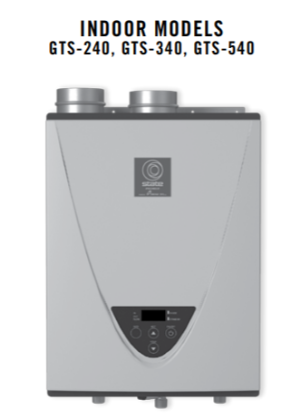
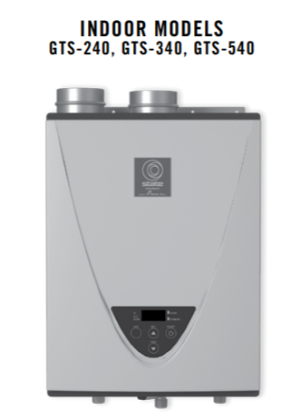
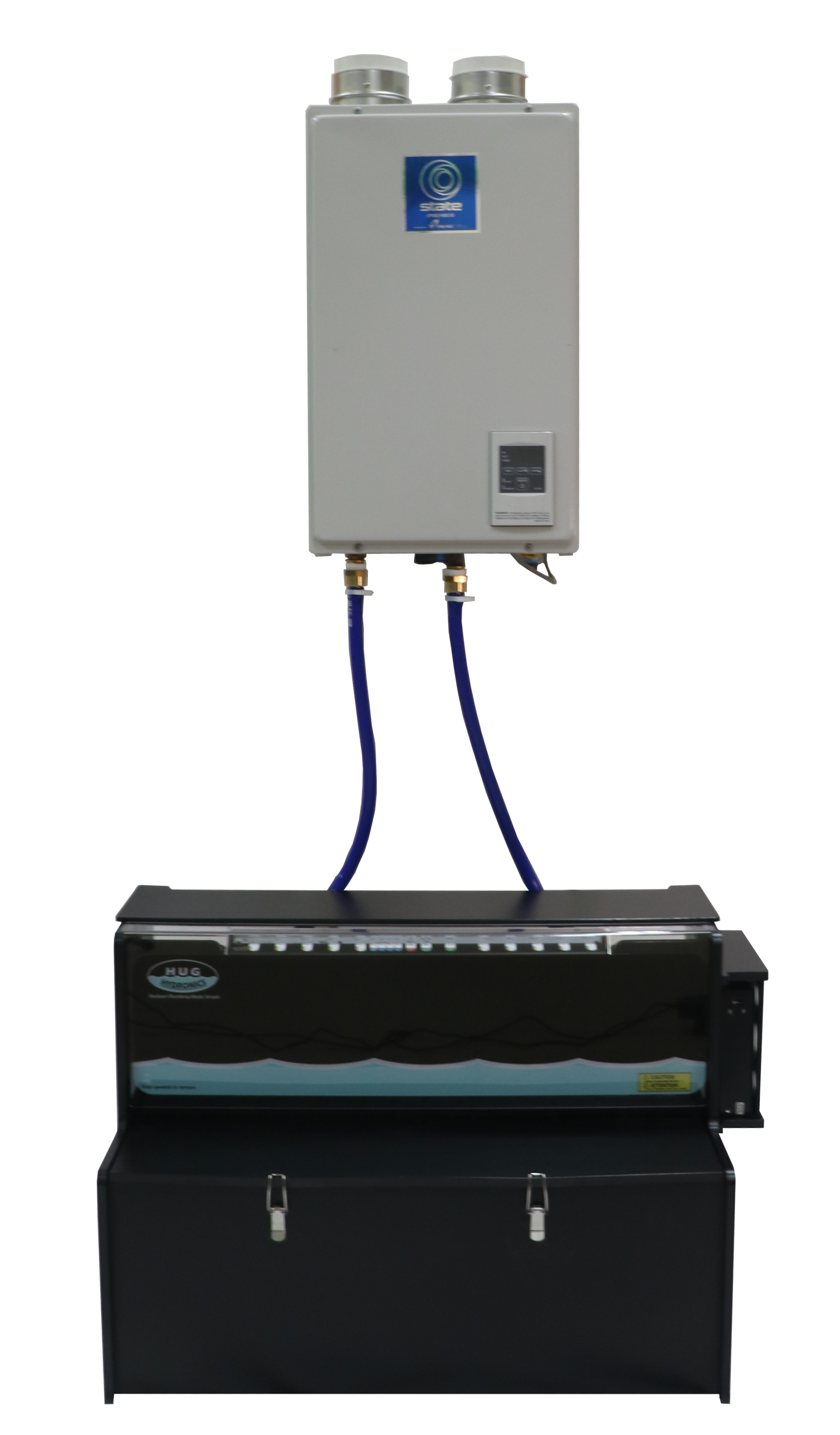
Tankless water heating condensing indoor 199k Btu [Propane] GTS-540-PIH
Couldn't load pickup availability
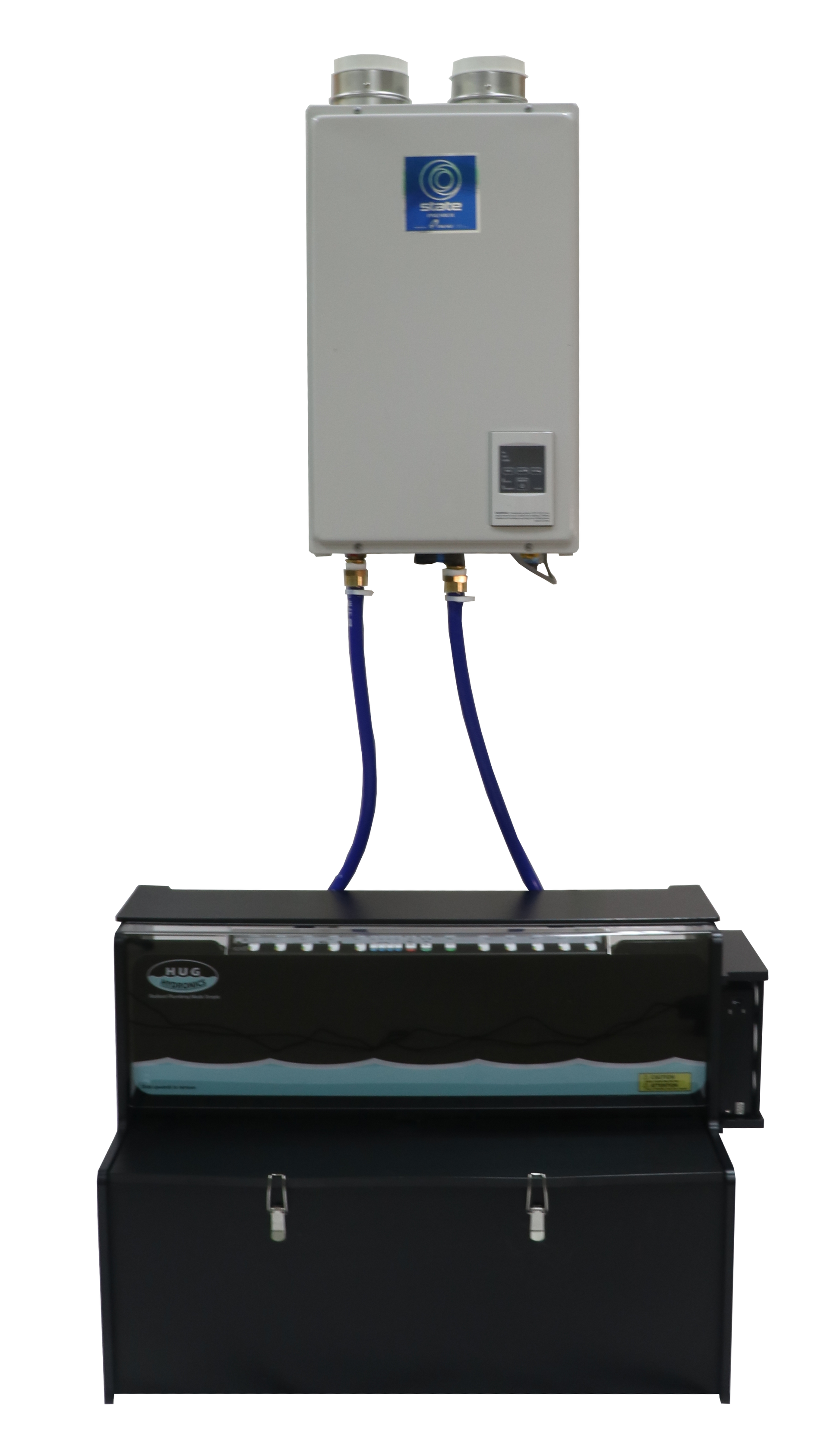
Purchased with a HUG Hydronics system
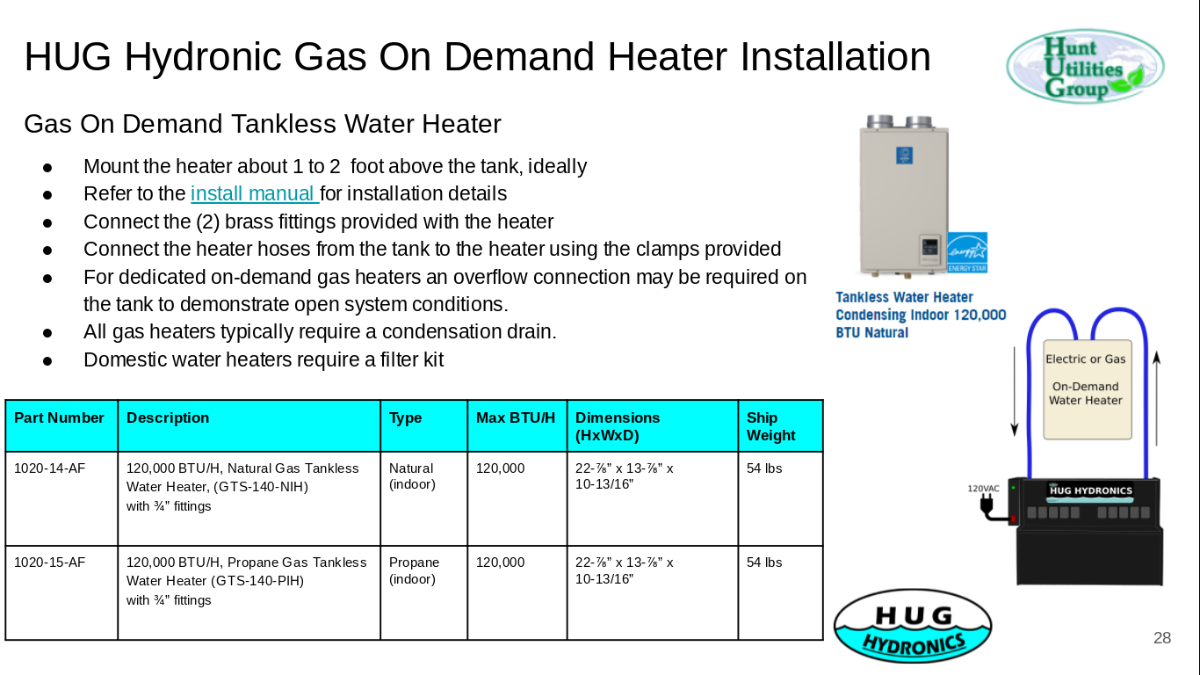
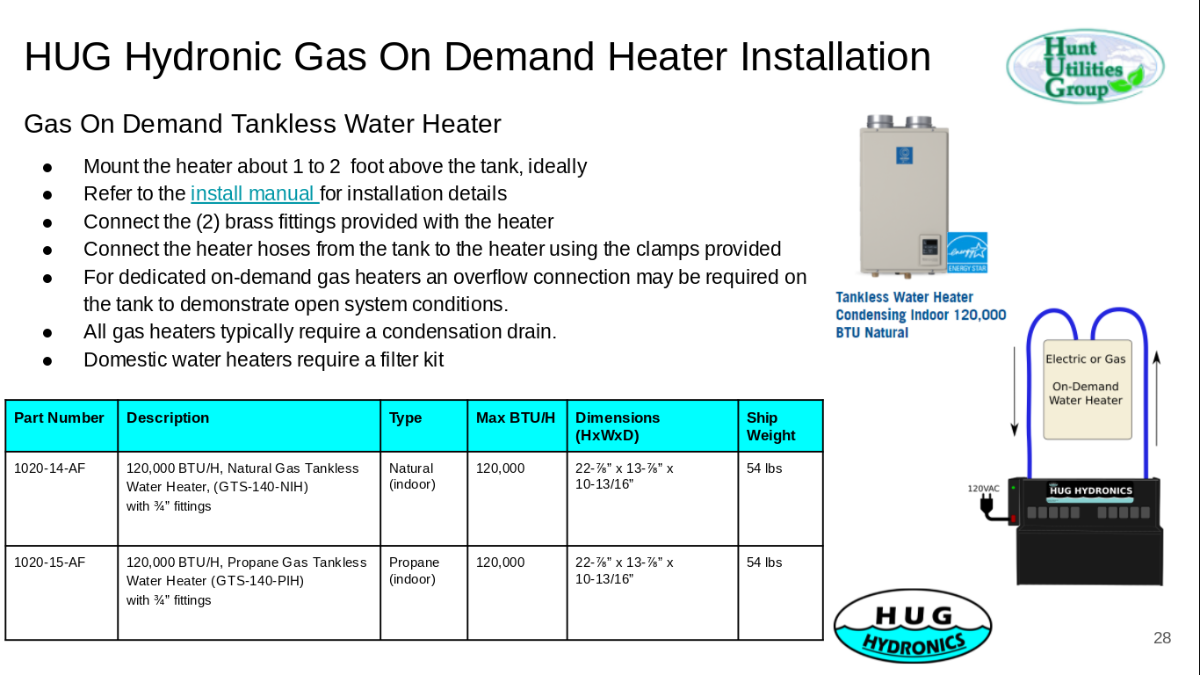
When you purchase a boiler and the HUG Hydronics system together you will receive a complimentary fitting kit. The Large Heat Source Pump works best with this heater.
Propane Water Heater Model: GTS-540-PIH
- Continuous Hot Water—Delivers continuous hot water at a flow rate of up to 10.0 GPM
- Optimized Heat Transfer—Primary commercial-grade copper heat exchanger is 25x better than stainless steel at heat transfer, stabilizing outgoing water temperatures quickly
- Corrosion Protection—Secondary heat exchanger is made of 316L Stainless Steel to protect against corrosion
- Energy Efficient—Highly-efficient condensing Ultra-Low Nox tankless water heater delivers up to .93 Uniform Energy Factor (UEF)
- Flexible Venting—Flexible power direct vent design allows for venting up to 100 feet using either PVC, CPVC, polypropylene or ABS Pipe (solid core)
- Shared Vent for Multiple Units—Common vent up to 8 units
- Simple Control & Troubleshooting—Integrated temperature controls and advanced diagnostics make it easy to adjust settings and troubleshoot problems
- Safety Features—Added safety features include a flame sensor, temperature monitoring, and an overheat cutoff fuse
- Peace of Mind—Industry-leading 15-year limited warranty on heat exchanger in residential applications
The State ProLine® XE GTS-540-PIH Indoor Tankless High Efficiency Condensing water heater uses up to 199,000 Btu/hr of propane to deliver an endless supply of hot water for a 3-bath home in northern climates and a 4-bath home in southern climates (one shower head per bath).
This Ultra-Low NOx model with condensing technology has a Uniform Energy Factor of 0.93 and meets the ASHRAE 90.1-2007 energy efficiency requirements, making it environmentally friendly and reducing operating costs.
The GTS-540-PIH uses commercial grade copper alloy for the heat exchanger tubing and is suitable for heavier residential usages, such as domestic recirculation systems. Remote control is included as a standard feature on all outdoor models. Indoor models are certified up to a 10,100 ft. altitude.
For high-use applications, Easy-Link up to 4 units with the included communication cables. A Multi-Link controller (sold separately) can link up to 20 units.
The GTS-540-PIH tankless condensing water heater provides years of hot water through innovation and quality and is backed by an industry-leading 15-year limited warranty.
What size of boiler or water heater do I need?
Try our wizard. Takes 10 minutes for a full in-floor heating plan and 3 minutes for boiler sizing.
In-Floor Heat Boiler Questions
Q: What are the best types of water heaters or boilers for hydronic heat?
A: The best water heater (or boiler) for hydronic heat depends on the size of the space, the building’s heat-loss requirements, availability of fuel in your area, and the number of heating zones. Let’s go through them:
- Electric boilers are often a simple, but efficient choice for smaller or well-insulated buildings. They are also often the least expensive method in terms of cost. If planned out properly, heating during off-peak hours can save tremendously.
- Natural gas or propane boilers may be better suited for larger projects with higher heating demands. Natural gas is often an economical and relatively predictable option for properties already connected to a utility gas line. Although natural gas rates can rise or fall with demand, it’s at a relatively gradual change.
- Propane is a practical alternative for homes and buildings that do not have a natural gas service, this happens especially in rural areas. However, propane prices may vary more noticeably based on seasonal demand, regional supply, fuel-market conditions, and delivery costs.
- You should compare your region's fuel prices, availability, and supplier programs before selecting your heat source.
The HUG Hydronics system makes selecting and connecting your heat source easier than traditional hydronics systems. Its compact, low-pressure design works with most common eclectic, natural gas, and propane heat sources without requiring complicated walls of pumps, valves, or copper piping. Use the HUG Wizard to enter your project details, and our team will help match your system with an appropriately sized heat source.
Q: Can you run hydronics with a water heater or boiler?
A: Yes! Hydronic heating systems can use either a boiler or an appropriately rated water heater as a heat source.
Boilers are designed specifically for space heating and are often the best choice for larger buildings, colder climates, or projects with higher heating demands. Some water heaters can also supply hydronic heat, but they must be approved for space heating or combination applications and sized to meet the building’s heat-loss requirements. A standard domestic water heater should not automatically be assumed to be suitable for hydronic heating.
The HUG Hydronics system can connect with compatible electric, natural gas, or propane heat sources (among many others!) It should be noted that the HUG Hydronics system can work with almost any heating source, but electric, natural gas, and propane are the most frequently paired fuel sources. Its compact, low-pressure design simplifies the rest of the mechanical system, reducing the need for a complicated wall of pumps, valves, and copper piping. The HUG Wizard helps identify the project’s heating requirements so the right heat source can be selected for the job.
Q: What types of heat sources work with hydronic heating?
A: Hydronics heating systems can work with many different types of heat sources, including electric, natural gas, propane, wood boilers, approved water heaters, air-to-water heat pumps, and many others. Let’s go through the main ones:
- Electric heat sources are often simple to install and maintain.
- Natural gas and propane can provide higher heating capacity for larger buildings.
- Wood-fired systems may also be incorporated when an appropriate heat-exchanger and controls are used.
- Heat pumps can be an efficient option for hydronic heating when they are designed to heat water, such as an air-to-water system.
- Solar thermal collectors can contribute heat directly to the water through a properly designed storage tank or heat exchanger. Because solar output changes with weather and daylight, a dependable backup heat source is typically still required.
The HUG Hydronics system gives customers flexibility when choosing compatible heat sources. Its compact, low-pressure design can connect with many common electric, natural gas, propane, heat-pump, and wood-fired options while simplifying the pumps, controls, zoning, and distribution side of the system. This allows homeowners and contractors to select the heat source that fits the project without building a complicated mechanical system.